Build on Ground That Supports Lasting Structures
New Development Land Services in Vestavia for undeveloped lots requiring clearing, grading, and drainage before home or community construction
Traywick Sitework provides new development land services in Vestavia, Mountain Brook, Homewood and surrounding areas for builders, developers, and property owners transforming raw land into construction-ready sites for single homes, residential communities, or commercial projects. You need land cleared of trees and brush, soil graded to create level building pads, and drainage systems installed to prevent water from pooling near future foundations or washing out roads during heavy rain. Site preparation includes land clearing to remove vegetation and root systems, excavation to reach stable subgrade and remove unsuitable material, grading to establish finished elevations and stormwater flow paths, and installation of retaining walls or concrete work that supports structures and prevents erosion on sloped terrain.
Land clearing opens space for roads, building lots, and utility corridors while removing stumps and organic material that decompose and cause settling under pavement or foundations. Excavation exposes load-bearing soil layers and removes pockets of clay, fill, or debris that cannot support structural weight. Grading shapes the site to match engineered plans, creating slopes that move rainwater toward retention areas or street drainage and building pads that remain stable under concentrated loads. Proper preparation prevents foundation cracks, driveway settling, and erosion damage that become expensive problems after homes are built and sold.
Schedule a site consultation with Traywick Sitework to plan land clearing, grading, and drainage work for your development project in Vestavia.
What Your Site Looks Like After Development Prep
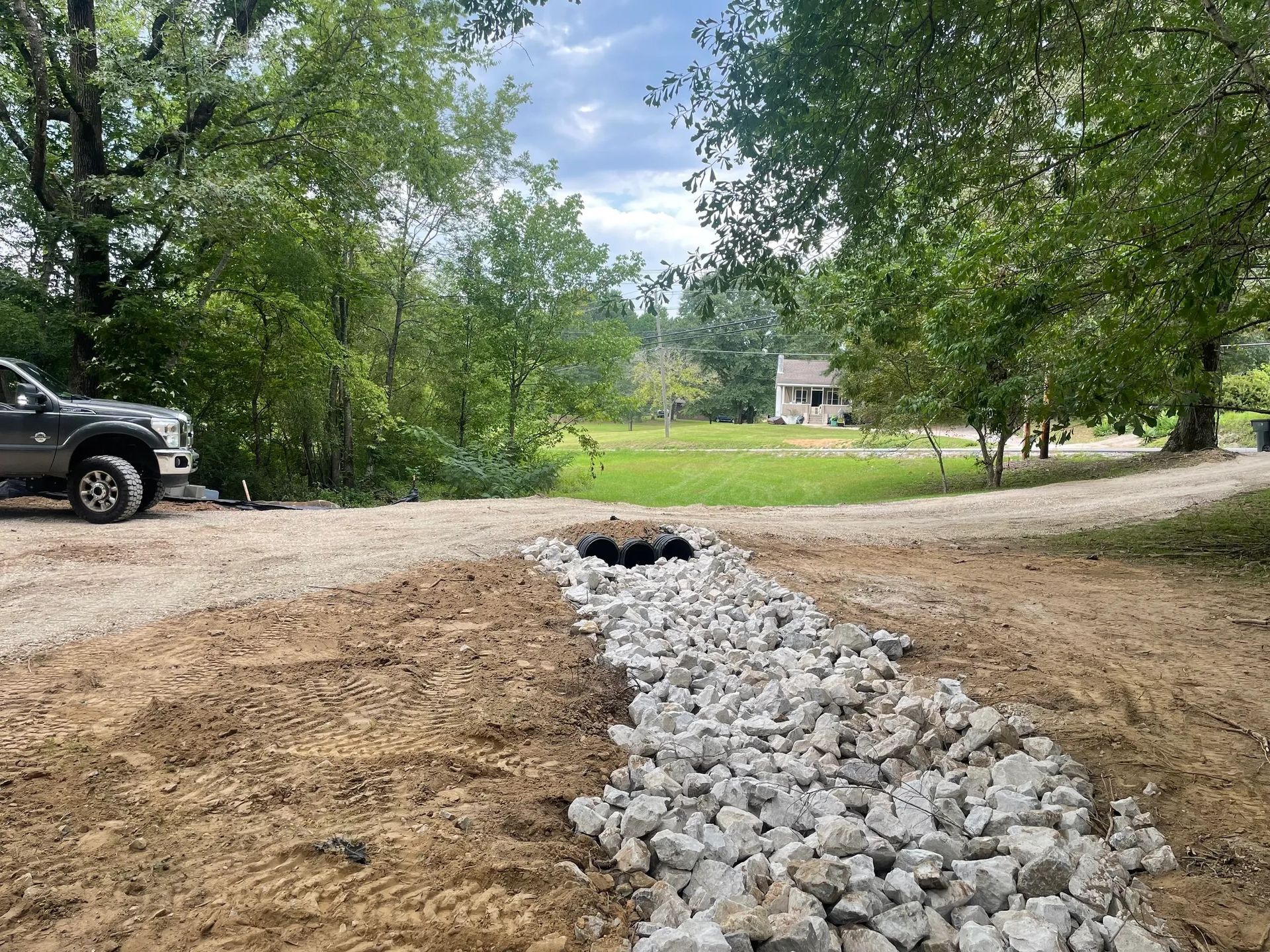
Your undeveloped parcel transitions into a graded site with defined building lots, access roads, and visible drainage paths. You see level pads where homes or structures will be built, cleared corridors for driveways and utilities, and graded swales or ditches that direct runoff away from building zones. Tree stumps and root masses are removed, topsoil is stockpiled for later use, and subgrade soil is compacted to meet engineering specifications for bearing capacity.
After Traywick Sitework completes clearing and grading, your construction crew works on stable ground with predictable conditions and controlled water management. Builders avoid delays caused by surprise soil issues, standing water, or unstable fill. Retaining walls installed during sitework hold back soil on sloped lots, creating flat zones for homes or roads while preventing erosion that would otherwise undermine adjacent areas or wash sediment into drainage systems.
Multi-phase development projects are coordinated to complete rough grading and drainage infrastructure early, allowing individual lots to be finished as building progresses. Sitework does not include final landscaping, sod installation, or finish grading around completed homes unless those tasks are included in a coordinated project scope. Drainage systems are designed based on site topography and typical rainfall, but they do not replace county-required stormwater detention or treatment systems if your development plan includes them.
Questions Builders Ask About Development Sitework
Developers and general contractors in Vestavia and neighboring communities often ask about timing, soil conditions, and coordination across multi-lot projects.
What does land clearing include on a multi-acre development site?
Land clearing removes trees, brush, stumps, and root systems, then grades the site to rough elevations. Cleared material is hauled off-site or processed into mulch depending on project requirements.
How long does sitework take for a new residential community?
A typical subdivision with ten to twenty lots requires several weeks of clearing, grading, and drainage work depending on site size, tree density, and soil conditions. Phased developments spread sitework across multiple stages.
Why is proper drainage critical before building homes?
Drainage systems prevent water from pooling near foundations, washing out driveways, or eroding slopes between lots. Poor drainage causes foundation movement, basement leaks, and yard flooding after homes are occupied.
When should retaining walls be installed during site development in Vestavia?
Retaining walls go in after rough grading establishes lot elevations but before roads and driveways are paved. Walls must settle and cure before adjacent surfaces are finished.
What equipment handles large-scale excavation and grading?
Bulldozers and excavators remove material and shape rough grades, while motor graders establish precise slopes and finish elevations. Compaction equipment ensures soil meets engineering density standards.
Contact Traywick Sitework to evaluate your development site and plan the groundwork that supports safe, stable construction in Vestavia.