Prepare Commercial Sites for Structural Demands
Commercial Land Services in Vestavia for properties requiring stable ground before heavy structures or paved parking areas
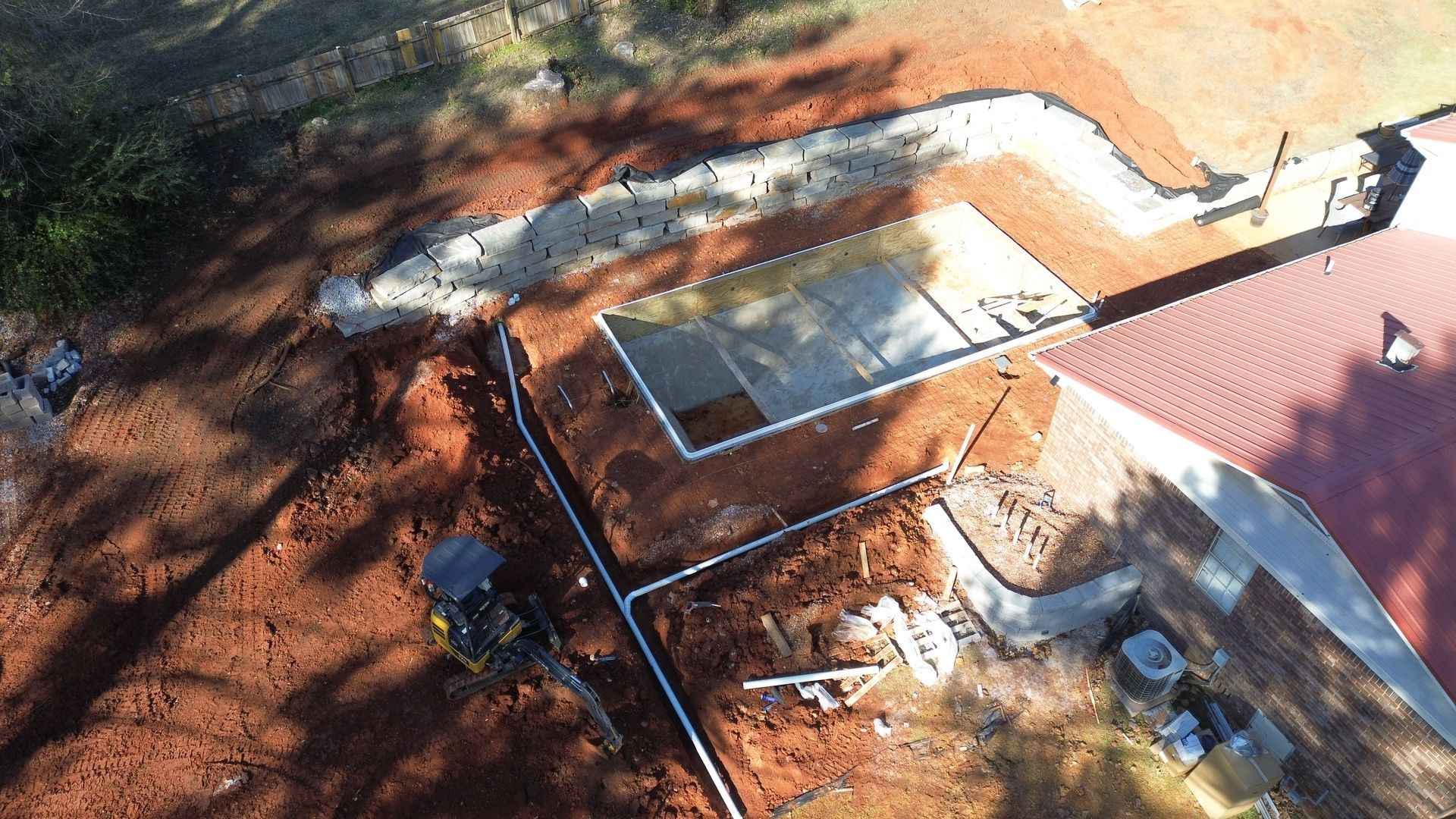
Traywick Sitework delivers commercial land services in Vestavia, Hoover, Birmingham and surrounding areas for developers, contractors, and property owners preparing sites for office buildings, retail developments, parking lots, and property expansions. Your project needs ground that supports concentrated loads from multi-story structures, handles daily traffic across paved surfaces, and drains stormwater without flooding low spots or eroding embankments. Site preparation includes excavation to reach load-bearing soil layers, grading to establish finished elevations and drainage slopes, land clearing to remove vegetation and unsuitable material, and installation of retaining walls or concrete pads that form the foundation for vertical construction.
Excavation on commercial sites often extends several feet below grade to remove topsoil, organic material, and loose fill that cannot support structural weight. Grading shapes the site to match engineered plans, creating slopes that move rainwater toward catch basins or retention ponds and building pads that remain level under load. Retaining walls stabilize elevation changes between parking areas and building zones, while concrete work provides durable surfaces for loading docks, walkways, and equipment pads. Proper soil stabilization and compaction prevent settling that leads to cracked pavement, tilted structures, and drainage failures after your building opens.
Contact Traywick Sitework to schedule a site consultation for your commercial development project in Vestavia or a nearby area.
What Changes After Commercial Sitework Is Complete
Your undeveloped or overgrown property becomes a graded, compacted site with defined building pads, access roads, and drainage infrastructure. You see level zones where structures will rise, sloped areas that direct runoff toward designated collection points, and stabilized soil that resists shifting under heavy equipment or building loads. Excavation exposes stable subgrade material, and compaction testing confirms the ground meets engineering specifications for bearing capacity.
After the site is prepared, your general contractor or building crew works on predictable ground with clear access routes and controlled water management. Traywick Sitework coordinates with project managers and other trades to keep sitework on schedule and aligned with construction phases. Retaining walls installed during grading hold back soil along property boundaries or elevation transitions, and concrete pads provide stable surfaces for HVAC units, dumpster pads, or utility access points.
Large-scale grading and excavation projects are planned around site-specific soil conditions, stormwater regulations, and phased construction schedules. Sitework does not include utility installation, asphalt paving, or landscaping unless those elements are part of a coordinated project plan. Drainage solutions follow engineered grading plans and local stormwater management requirements, which vary depending on site size and impervious surface area.
Common Questions About Commercial Site Preparation
Developers and contractors in Vestavia and neighboring communities often ask about timelines, equipment needs, and coordination during multi-phase commercial projects.
What does excavation involve on a commercial development site?
Excavation removes unsuitable soil, clears underground obstructions, and creates trenches for utilities or footings. Material is either hauled off-site or stockpiled for use as fill in low areas.
How is grading coordinated with other trades during construction?
Grading happens early in the project to establish access roads and building pads, then returns later for final grading around structures and parking areas after utilities are installed.
Why is soil compaction critical for commercial parking lots?
Compacted soil resists deformation under vehicle loads and prevents pavement from cracking or rutting. Inadequate compaction leads to premature pavement failure and costly repairs.
When should retaining walls be installed during site development?
Retaining walls go in after rough grading establishes elevation changes but before final grading or paving. Walls must cure and settle before adjacent surfaces are finished.
What size projects can your equipment handle in Vestavia?
Equipment and crew capacity support multi-acre commercial sites, including large-scale excavation, mass grading, and coordinated sitework across phased development projects.
Reach out to Traywick Sitework to plan excavation, grading, and sitework for your commercial property development in Vestavia.